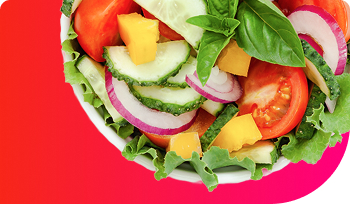
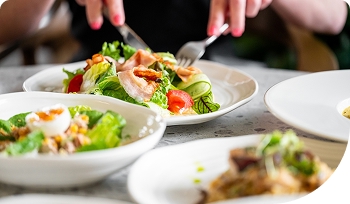
Eating healthy outside the office is possible
Paying attention to what we eat on a daily basis is essential and necessary to take care of our body and avoid diseases such as obesity, type 2 diabetes, hypercholesterolemia, cardiovascular diseases, etc.
Eating healthily is not always easy, especially when eating out, where time constraints or simply because we pay little attention, «temptations» often prevail over making the right choice. From the FOOD programme together with the Spanish Academy of Nutrition and Dietetics, we offer you some tips on how to choose the right menu.
9 main tips and guidelines:
1. Watch your portions, eat only what you need.
Did you know that studies have shown that people eat more the larger the portion size or amount of food available? It is important to adjust the amount of food you eat when you eat out to suit your lifestyle and physical activity.. Remember, if you finish your meal and go back to your job where you spend hours sitting down, reduce your portions! Some guidelines are:
- Assess your hunger
- Decide on the level of satiety you want to feel, taking into account the activity that awaits you after eating.
- Do you expect any physical exercise or are you going to sit in front of your computer?
- Order accordingly, if you don't need to eat the full menu, ask the restaurant for the possibility to choose a half menu or a full menu based on half portions.
2. Choose water as your regular drink
When eating, water should preferably be chosen both during meals and between meals. Water intake can be supplemented with herbal teas, broths, fruit juices or other drinks without added sugar. Regular consumption of sugary drinks increases the calories in the diet and regular consumption has been associated with an increased risk of obesity, diabetes and tooth decay.
3. Watch out for salt!
Usually, the dishes are served already seasoned; so, before asking for the salt shaker, taste the food. Aromatic herbs, garlic, celery, vinegar and spices can be used to reduce salt intake and enhance the flavour of dishes. Salt consumption in Spain is almost double the recommended level. and is one of the main factors implicated in high blood pressure, which in turn is a key risk factor for stroke and other cardiovascular diseases.
Excessive salt consumption has also been linked to gastric cancer, obesity, kidney stones and osteoporosis. In the Spanish diet only 20% of salt comes from salt added during cooking or at the table, the rest comes mainly from processed foods such as sausages, bread, cheese, snacks and other processed foods.
Excessive salt consumption has been linked to an increased risk of gastric ulcer and even stomach cancer, as well as worsening respiratory symptoms in people with asthma. One of the latest links between salt and health concerns the increased risk of obesity.
4. Eat at least five servings of fruit and vegetables a day.
The fruits and vegetables are key in the diet for its contribution of water, fibre, vitamins and minerals. They are particularly rich in vitamins A, C, K, B6 and folic acid, and minerals such as potassium and magnesium. Regular consumption of at least 5 portions of fruit and vegetables has been associated with a lower risk of mortality, overweight and obesity, high blood pressure, diabetes, cardiovascular disease and cancer.
At breakfast, as a dessert or snack, fresh or dried fruit is the best option. At lunch and dinner, ensure a portion of vegetables as a main dish or side dish.
5. Reduce the amount of meat and replace it with pulses.
The Spanish population exceeds the maximum recommended amount of meat consumption by more than double., The main source of saturated fats, a type of fat that in excess increases cardiovascular risk, among other effects.
Opt for lean meats low in saturated fat. such as chicken, turkey and rabbit (consumption is up to 4 servings per week, which is equivalent to a chicken fillet or a small chicken quarter). If the meat is high in fat, such as lamb or beef, do not exceed one portion every two weeks.
A Legumes are a good alternative to meatThey provide fibre, slow-absorption carbohydrates, iron and calcium. They are also a good source of protein when combined throughout the day with cereals, with the advantage that they provide very little saturated fat, unlike meat and its derivatives. Pulses are tasty in the form of salads, creams, purées or stews. There are stews for winter and refreshing salads for summer.
If meat or meat by-products are included in their preparation, as in the case of some traditional dishes, it is advisable to use them in small quantities. The absorption of iron from pulses improves when they are eaten together with foods that provide vitamin C, such as raw vegetables in salads or fruit as a dessert.
The recommended consumption of pulses is at least 2 portions per week (between 2 and 4). One serving corresponds to 60-80 g raw, equivalent to 150-250 g cooked. Pulses should be cooked in water that is not very mineralised or soft, in order to enjoy smooth textures; or if preferred, commercially available cooked pulses can be used, which will save soaking time and long cooking times. In these cases, select those that contain the least salt and rinse them in running water.
6. Avoid cooking techniques that add excessive fat to your dishes.
Cook dishes by steaming, sautéing, baking or grilling. Ask for sauces on the side so you can add only what you like. Do not abuse fried foods. Don't forget that there are beneficial fats for your health in products such as olive oil, nuts and fish that should be part of your daily diet because they contribute to maintaining normal blood cholesterol levels. For dressing, choose olive oil, preferably extra virgin olive oil in any of its varieties. And for cooking, olive oil or sunflower oil with a high oleic acid content.
In the daily menu, prioritise light dishes that are grilled, steamed, papillote, baked, boiled, roasted, grilled, grilled, grilled, sautéed, etc. And to improve the flavour, add different condiments and spices to enrich the dishes.
7. Fruit, your usual dessert
Prioritise fresh fruit as a regular dessert instead of sweets, dairy products and cakes. Fruit is the main source of vitamin C, which contributes to the normal functioning of the immune system, bones and gums, skin and protects cells from oxidative damage. Fruits contain around 75-90% of water which helps to keep us hydrated.
8. Dairy products, always skimmed
Milk contains a sugar called lactose, which can cause problems of intolerance or malabsorption in people who do not have the digestive enzyme lactase, or only a small amount, which is necessary for its digestion. Yoghurts have less lactose than milk and cheeses contain less lactose the more mature they are. Some people with lactose malabsorption may be able to take small amounts of aged cheeses and fermented milks such as yoghurt, but it depends on individual tolerance. Given the dietary relevance of this food group for nutrient coverage, the consumption of skimmed, low-fat or 0% fat dairy products is recommended for all age groups, except for children under 3 years of age.
9. Avoid snacking on foods with saturated fats, excess salt or added sugars.
For snacking between meals, choose wholegrain foods for their higher fibre, vitamin and mineral content. We are talking about wholemeal bread, pasta and rice, but fibre can also be found in fruit and vegetables, pulses, seeds and nuts. The Spanish population consumes between 17 and 22 grams of fibre, which means that more than 90% consume less than the recommended 25 grams daily. Fibre provides satiety, helps regulate intestinal transit and regular consumption is associated with a lower risk of diabetes, cancer and cardiovascular disease.
When snacking, it is advisable to eat foods that are filling and do not provide too many calories, such as fresh fruit, unsweetened skimmed dairy products, small sandwiches of wholemeal bread with fresh cheeses or lean cold cuts, a handful of unsalted nuts or dried fruit, etc.
Do you want to know more about the FOOD Programme?
What is the the FOOD programme