En qué consiste un mapa de empatía
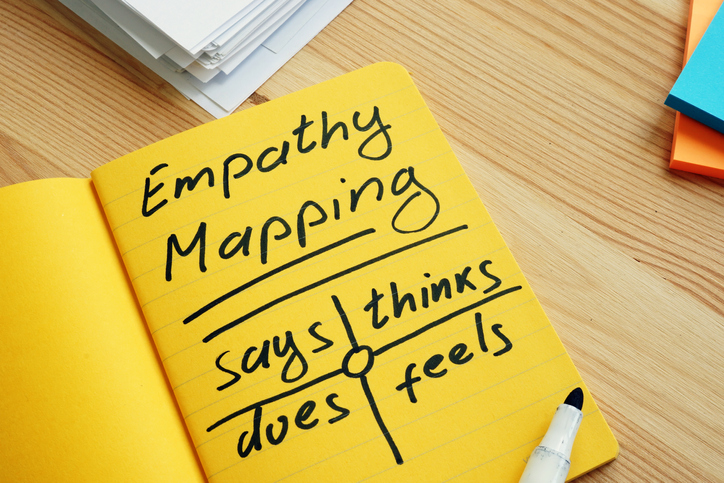
A map of empathy is a tool that allows a company to know its target customer in more detail and reliably. It can be presented in different formats, although the most common is a document divided into quadrants (four at the top and two at the bottom), with specific questions about the client being answered in each quadrant.
The six questions that appear on a map of empathy are as follows:
- What does he/she think and feel?
- What are you listening to?
- What do you see?
- What does he/she/it say and do?
- Where does it hurt?
- What are your needs?
Each of these questions addresses the customer's feelings. By answering them, the company can gain a much better and more complete understanding of the target customer they are dealing with, which allows them to adapt their products or services to genuinely meet the customer's needs.
On the other hand, it has to be borne in mind that The questions presented by an empathy map are general, and which will need to be adapted to each specific case. For example, when the empathy map asks "What does he see?", it is asking about how the customer sees the world around them, who their friends are, what their everyday world is like. When it asks "What are his pains?", it is referring to their fears and frustrations, the obstacles they must overcome to acquire the product or service being offered, etc.
How to create a quality empathy map
When creating a quality empathy map, eight phases are usually established that need to be carried out for the map to successfully fulfil its function:
- Defining the business ideaThe first thing necessary when creating an empathy map is to know the product or service you want to sell. In other words, you need to have a specific business that offers something to a hypothetical customer and that will help them solve one of their needs.
- Customer segment definitionThe second phase of creating an empathy map will be to get to know the customer for whom the product or service you want to sell will be targeted. In other words, to identify the hypothetical customer who might be interested in the product that the business defined in the previous phase will offer.
- What does he/she think and feel?The next phase is already the first of the empathy map questions. It involves putting yourself in the shoes of the hypothetical customer defined in the previous phase and answering the question of what they think and feel with the information we have about them.
- What are you listening to?The next phase involves responding to the client's ideas, based on the ideas they receive. Who influences them, what media they consume, etc.
- What do you see?In this phase, an attempt will be made to understand the customer according to their everyday world, the people who surround that hypothetical customer, and how they influence them.
- What does he/she/it say and do?In this phase, we will seek to understand what your hobbies are and what topics interest you.
- Where does it hurt?This is a very important phase, as it has to define the obstacles that the hypothetical client will have to overcome before becoming a real consumer of the product or service being offered.
- What are your needs?Finally, an attempt will be made to answer, based on all the information gathered so far, what the hypothetical client's real and most immediate needs are.
From each of the phases carried out to develop the empathy map, you will obtain a Detailed information on how the ideal customer feels and sees the world around them the products or services will be aimed at. In this way, using the information provided by the empathy map, the most appropriate decisions can be made so that the product or service offered to the customer truly adapts to their needs, according to their most immediate expectations, the influences around them, and the obstacles that may exist between the customer and consumption.