
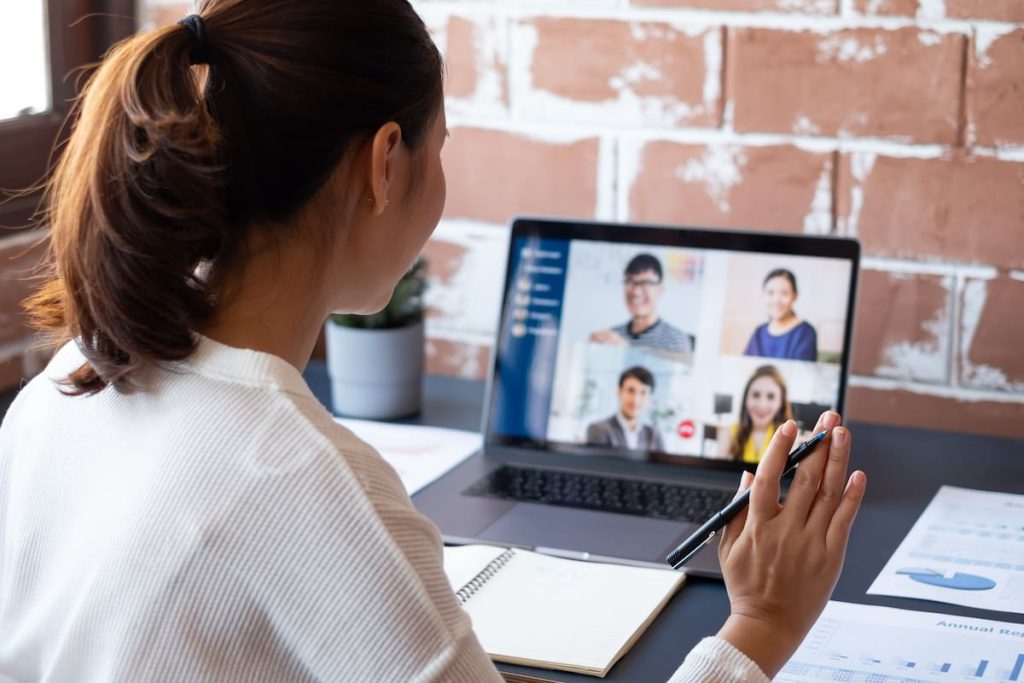
The years 2020 and 2021 have not been and are not being easy for anyone. Firstly, obviously, at a health level, and secondly, for both workers and companies, who have seen their routines, their way of working and their expectations changed from one day to the next. The confinement to our homes to which we have been forced to confine ourselves has conditioned many people to having to to develop their professional activity from home by relying on new technological trends. All these changes, to which we have been forced to adapt from one day to the next and without any prior training, have also resulted in the the need to change the old ways of working.
A a new way of understanding work which has meant that we have had to learn and manage new technological solutions so that businesses can continue to operate. A new professional model that is here to stay, The result has been that many companies have definitively adopted the hybrid working models, combining face-to-face and teleworking.
The new ways of working are a transformative approach to the system of work we have known up to now with the support of digitalisation. New technological tools have allowed us to experience a change in the concept of many work activities, as well as in the relationships between employees and companies. At the same time, the trend is towards flexible working hours and more horizontal organisations that break away from hierarchical structures.
The new ways of working have become the epicentre of a wide range of work activities. Let's take a look at the following what these new forms of work are and what features they offer.
Remote or teleworking and flexible working is an unstoppable reality that is already in our lives and will continue to improve and improve over time, but it will not go away. The new forms of work offer three basic characteristics:
As mentioned above, thehe digitisation of companies has been the essential factor in the in order to be able to generate new, much more productive and flexible ways of working. Technology optimally integrates human capabilities with the functionality of new digital tools.
As a result of all this, the global business environment is changing and evolving at a rapid pace, a unique opportunity for companies to improve their processes while saving costs. In addition, digital technologies change what workers do and how they do it, and workers must adapt to new methods, organisational processes and tools.
Nowadays, new forms of employment, such as teleworking or freelancing, are gaining momentum due to the fact that technology makes it easier to hire employees remotely, at the same time as ensures that all the duties of the post are fulfilled.

Until 2019, before the pandemic, offices were seen as a necessary element to improve productivity, to cultivate corporate culture and thus attract and retain the best talent. But with the arrival of the pandemic, it has been demonstrated that all this was not so necessary and that the new ways of working that companies have sought to survive have been a success.
Some of the most important new forms of work that have emerged during this process of change are:
But what are the most significant changes brought about by the new ways of working in the business world? Here are some of the most important ones:
As we have seen, the technological development and globalisation have completely changed the way we work. In the aftermath of the pandemic from which we have not yet managed to emerge, there has been a radical change in the workplace and we have been forced to generate new ways of working which, little by little, have been displacing the traditional ones. Discover all the possibilities that Edenred offers companies and workers in their new ways of working. Ask for information without obligation.