A first step
There are many «manuals» or «guides» that act as dictionaries to tell us what each gesture or, in our case, each posture means. However, Many variables influence non-verbal communication that make it impossible to establish an exact equivalence between gesture and meaning.
Before analysing non-verbal communication, postures or any other expression of body language, we should always remember that there are variables that can influence them:
- The situationBody language will not be the same when faced with an interviewer perceived as a threat compared to one perceived as friendly.
- Environmental conditionsA person will have different postures if they are in a hot environment (e.g., arms and legs extended) or if they are in a cold environment (arms wrapping around the chest).
- Personal circumstancesFor example, an itchy nape of the neck might lead you to scratch it without necessarily meaning you're nervous, as is often said.
- ProximityThe posture will also vary if a person is one metre away from their interlocutor (relaxed posture) or if they are a few centimetres away from them (recoiling posture).
Therefore, the aspects of non-verbal communication that we will mention below can be influenced by these variables. It is the responsibility of each person to take them into account when analysing the non-verbal communication of their interlocutor.
Non-verbal communication: standing postures
Now that we have established the foundations that any body analysis should take into account, let's look at some aspects relating to standing position.
There are two body systems that we must assess when analysing the standing posture of another person: they are called axial and satellite.
- The axial system it is made up of the pectoral area, the feet and the head:
- La pectoral area It is the one that usually indicates to the greatest extent where a person's attention is directed. If it is directed towards you, they will generally be paying you their full attention.
- The feet They also indicate your interlocutor's interest. If they are oriented towards the door, they probably want to leave and your conversation isn't to their liking (or perhaps they're in a hurry).
- The orientation of the head it can also indicate the attention your interlocutor is paying you, although to a lesser extent than the previous two elements. However, it is the most reliable element when analysing active listening.
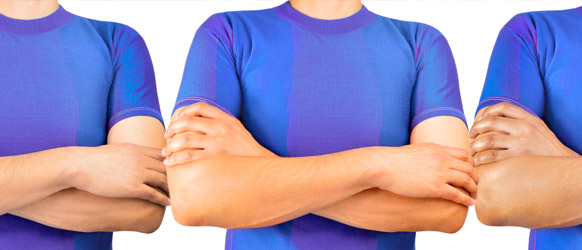
- The satellite system It is made up of the arms. Remember that in non-verbal communication and postures, there are no strict rules. If someone standing has their arms crossed, they don't necessarily have to be protecting themselves, as is often said. Perhaps they are simply more comfortable in that position.
Non-verbal communication: sitting postures
In the business world, it's very common to have conversations while sitting in a chair. Below, we discuss some of the considerations we can take into account regarding the most common seated postures:
- Look at the shoulders from your interlocutor. Are they relaxed or tense? This can give you indications about their emotional state.
- Are the legs Are they crossed or separated? Generally, those who separate their legs widely are comfortable and confident.
- In the case of crossed legs, If a person is usually comfortable with their legs crossed and at some point they are not, it can be a sign that they are nervous.
In summary, there isn't an exact guide on how to interpret non-verbal communication and body language, but there are tips we can take into account when making an initial analysis. After that initial analysis, we will need to verify that what we believe is actually confirmed. This is the only way to be 100%% convinced that we have correctly interpreted our interlocutor's posture.