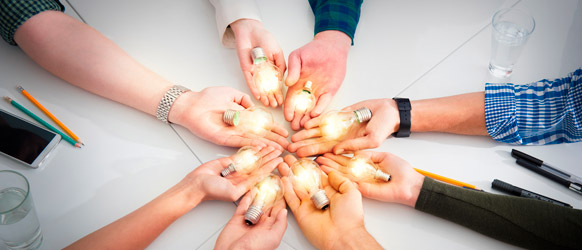
As you know, there are internal communication dynamics highly recommended to strengthen the bond between managers and employees, but sometimes it can be we lack time to study how they work and put them into practice in our own company. For this reason, we have looked for and selected two communication dynamics that are simple to implement and very useful for reinforcing the professional commitment The ultimate goal? To ensure that our employees are happy with their professional life to produce more and better.
Internal communication dynamics, example 1: “getting to know each other”.”
The first of the dynamics of internal communication that we have selected has one overriding objective: that know more and better to each of the people who are part of your team.
Personal knowledge is the basis for good internal communication within the company for a very simple reason: if you do not know your people personally, you cannot know whether they are happy or unhappy with their job, their functions, their skills, their direct boss, their colleagues....
Getting to know someone opens the doors to dialogue, to that two-way communication which is absolutely necessary to create a positive and productive working environment.
Having said that, let's look at what this first internal communication dynamic we have called “getting to know each other” consists of.
Group dynamics “getting to know each other”, how is it done?
We divide the group into a maximum of 8 persons and place them in a circle. Each person should say their first and last name and find two qualities that characterise him/her and begin with the same initial letters. The first person introduces him/herself and says his/her qualities. The second person does the same, but also remembers the name, surname and qualities of the person who has just introduced himself/herself, the third person does the same with his/her own identity and qualities and, in addition, the names, surnames and qualities of the two people who have introduced themselves before... So on and so forth until the circle of companions has been submitted correctly.
For example:
Ana Pérez. Friendly and perfectionist.
Cristina Martínez. Charismatic and “handywoman”.
Felipe García. Festive and funny.
It is important that we remind the group that anyone can participate helping colleagues who do not remember a name or a quality. The atmosphere should be competitive, fun and, above all, friendly, fun.
Internal communication dynamics, example 2: “resolving conflicts”.”
At any human group there are conflicts and conflicting points of view. This is the way it is and we cannot change it, but when conflicts become part of the daily life of a company and we do not know how to manage and resolve them we can end up with a big problem between hands.
Thus, it is necessary that we find a good communication dynamic that helps us to resolving professional conflicts in its earliest phase, a group dynamic such as the one described below.
Group dynamics “resolving conflicts”, how is it done?
We need to meet in a classroom or similar with a blackboard to write on. A volunteer will act as the group facilitator, present the problem to be solved and write down the behaviours, phrases or actions that have provoked the conflict. Any participant can contribute their impressions about the event that triggered the discussion, clarify a comment made by another colleague, etc.
Once we have broken down the conflict by writing down the central ideas on the whiteboard, we will move on to note down possible solutions to the conflict trying to find a fair, reasoned and accepted solution for the group.
For example:
Alicia and José argue because they both need to use the company car at the same time. The problem occurs day in and day out, so the group leader takes the conflict to a debate.
Alicia, José and the rest of the colleagues discuss the problem while the facilitator notes down the different points of view: Alicia's priority of use due to her seniority in the company, José's need to have the car always available to do his commercial work, etc.
Once the problem has been posed, possible solutions are noted down: try to buy another company car, divide the use of the car into mornings for Alicia and afternoons for José, buy a car in the morning for Alicia and in the afternoon for José, and so on. a Transport Ticket for one of them to use when the car is not available, etc.
This is one of the most effective internal communication dynamics that exists as long as there is a positive working environment and not rarefied by years and years of resentment and unresolved problems.