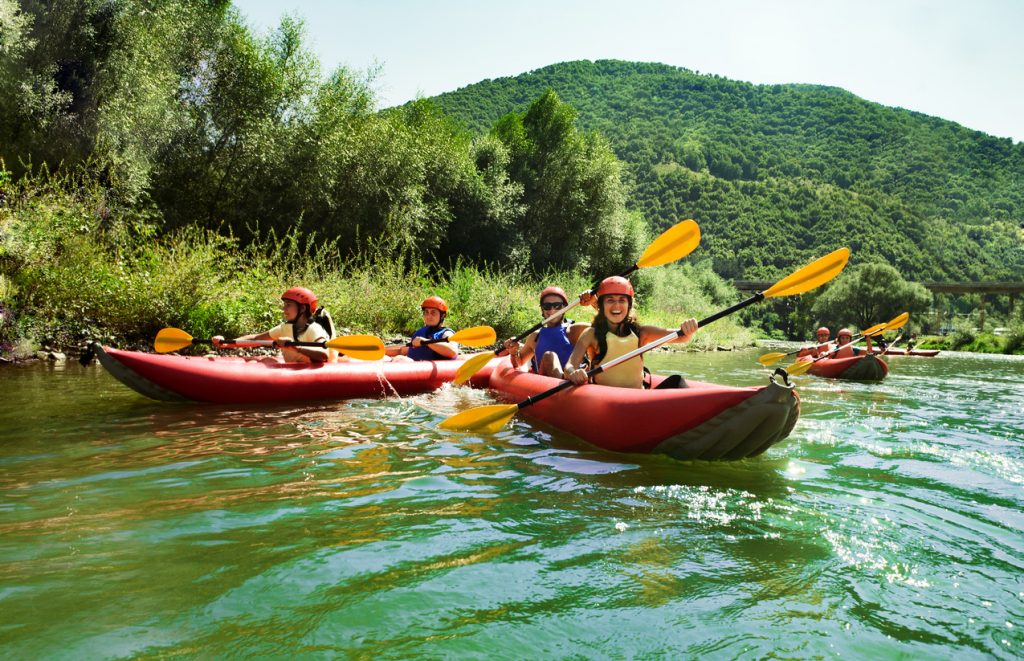
Outdoor training
El outdoor training está formado por un conjunto de actividades y ejercicios que se realizan al aire libre, en entornos naturales o urbanos, con el objetivo de mejorar la condición física, la salud mental y fomentar el trabajo en equipo. set of outdoor activities that are guided by a coach. Although they can be applied to practically any sector, they are designed with the needs of company teams, whose contact, in many cases, is limited solely to office working hours.
Thanks to the outdoor training, participants strengthen their personal ties, developing Aptitudes such as communication and teamwork beyond the traditional work environment. Despite the fact that outdoor training always has a jovial and seemingly leisurely focus, the activities that take place during these types of events are specifically designed for the development of skills necessary in employees' job roles. Therefore, carrying out sports activities or outdoor games is not limited to just a different and fun activity, but rather contributes to leadership development, decision-making, developing teamwork skills or improving conflict resolution, among many other benefits.
Outdoor training seeks to achieve several objectives, including:
* **Team Building:** Enhancing cooperation, communication, trust, and problem-solving skills among team members.
* **Leadership Development:** Identifying and nurturing leadership qualities, as well as improving decision-making and delegation abilities.
* **Stress Management and Resilience:** Helping individuals cope with challenging situations, build mental toughness, and develop adaptability.
* **Personal Growth:** Encouraging self-discovery, boosting self-confidence, and overcoming personal limitations.
* **Improved Communication:** Fostering open and effective communication within groups through shared experiences and challenges.
* **Creativity and Innovation:** Stimulating new perspectives and problem-solving approaches in a different environment.
* **Boosting Morale and Motivation:** Reconnecting employees with nature and each other, leading to increased job satisfaction and motivation.
* **Skill Development:** Teaching practical skills such as navigation, survival techniques, or specific task-related competencies depending on the programme.
The aim of outdoor training is twofold. On the one hand, despite its leisurely appearance, we have the training of employees in those disciplines or skills that will be of help to them in their job. The fact that the exercises are carried out outdoors and in a relaxed atmosphere improves the responsiveness of employees, but this does not imply that they are exercises with a lesser impact on their development, as they are exercises and activities expressly designed for employees to make use of the specific skills that are to be fostered with each exercise.
Likewise, the other objective of outdoor training is the strengthening of personal ties between the employees themselves. It is generally very common for workplace relationships to be limited solely to the work environment and, at best, very limited friendships may be formed. This means that communication and problem-solving are carried out distantly, in many cases without trust. However, thanks to activities such as outdoor training, personal ties between employees are strengthened. This is a result of taking them out of a specific and repetitive environment, which forces them out of their comfort zone and compels them to develop different communication skills suited to the new environment. In addition to the different environment, the fact that the activities carried out are also different provides another element that breaks down habitual comfort zones, leading to a much more effective outcome than if the experience were limited solely to a change of work spaces or environments.
What are the benefits for companies and employees?
The benefits of outdoor training activities are wide-ranging and bring advantages to both employees and companies, since having employees with a wide range of skills and knowledge is a key factor in the success of outdoor training activities. more and better social tools, these can be applied in their daily work, becoming more efficient and decisive.
Some of the most common benefits of outdoor training activities for employees include:
- Strengthening social relations in the working environment
- Increased capacity for teamwork
- Improving communication
- Negotiation improvement
- Greater capacity and effectiveness in conflict resolution
- Improved learning capacity
- Easier to step out of the usual comfort zone
- Development of emotional intelligence
- Leadership development
- Improve the workplace atmosphere after outdoor training activities
Investing in the employee
The importance of outdoor training is evident in the improvements to an employee's capabilities after undertaking these activities. Outdoor training is an example of the importance of investing in an employee beyond just their salary, and in fact, their conditions can be improved without additional costs for the company thanks to alternatives such as Flexible remuneration. It should be noted that, Any investment made in an employee will have a positive impact on the company., as it will have a return proportional to the investment made, whether through more traditional methods or more current ones, such as outdoor training or other coaching activities.